


SpeedCash: Play & Earn Money
Leaps Gaming
I approached SpeedCash: Play & Earn Money as an entertainment app first, rather than treating it like a dependable income source. Its central idea is simple: spend time playing available games and work toward cash or gift-card rewards. That makes it appealing during spare moments, but the experience is shaped just as much by your phone’s connection as by the games themselves. Screens need to load, progress needs to be recognized, and reward-related actions need a stable path between the app and its online services.
After using it, my honest view is that SpeedCash is best for people who already enjoy trying casual mobile games and would welcome a small incentive for that time. I would not recommend installing it with the expectation of replacing paid work or producing predictable earnings. The entertainment is the immediate value; the reward is something to pursue patiently. That distinction makes the app easier to enjoy and prevents the usual disappointment that comes from treating reward apps like guaranteed cash machines.
How SpeedCash feels when your connection is doing the work
SpeedCash comes from Leaps Gaming and sits in the entertainment category. It is free to install, carries a Mature 17+ age rating, and has reached over 100 thousand installs. The app has a 4.4 average from around 6.6 thousand ratings, with roughly 1.5 thousand written reviews, so there is already a meaningful group of people trying the same reward-focused format. It was released on December 6, 2024, and the current version is 1.4.2, with Android support beginning at version 7.0.
The first thing I noticed is that this is not the kind of app I would open expecting a self-contained offline session. The useful parts depend on communication with the service: discovering what is available, moving between the reward environment and a game, and having activity recognized afterward. A weak signal can therefore affect more than loading speed. It can make the whole sequence feel uncertain because you may not immediately know whether a completed action has been recorded.
That matters when you are playing in short bursts. If I have only a few minutes before leaving home, I want the transition from opening the app to choosing something to be quick. A slow connection turns that small break into waiting. On a reliable home network, the process feels more natural because screens respond promptly and I can concentrate on the game instead of wondering whether the app is still communicating.
Related News

Why WhatsApp Messenger Still Makes Everyday Communication Feel Easy

Jurassic World: The Game Is the Better Dino Tycoon for Strategic Players

Threads in Real Life: Who Should Join, Lurk, or Leave

How SHEIN Turned Shopping Into an Endless Content Feed

How to Make Fortnite Feel Smarter on Mobile

Should You Switch to Microsoft Outlook on Mobile?
My practical advice is to open SpeedCash when you have a stable connection, especially before starting a longer session. I would avoid beginning an important reward-related task in a basement, a crowded station, or any place where the signal repeatedly drops. This is not because the app promises a particular offline mode; it is because online reward tracking is inherently more comfortable when the connection is steady.
Why short sessions can be more convenient than long ones
The app fits naturally into fragmented time. I can imagine using it while waiting for an appointment, taking a break between errands, or relaxing after dinner. Those situations are better suited to a reward app than a planned “work shift,” because they keep the pressure low. If a game does not hold my attention, I can stop without feeling that I have lost an entire evening.
There is also a useful trade-off here. Short sessions reduce the frustration of a sudden connection problem, but they may also make progress feel less visible. A user who checks in briefly may need more patience before the reward side feels worthwhile. Longer sessions can be more engaging, yet they increase the chance that a battery, signal, notification, or accidental app switch interrupts the flow. I prefer treating each session as entertainment with a possible bonus, not as a timed financial task.
Gallery
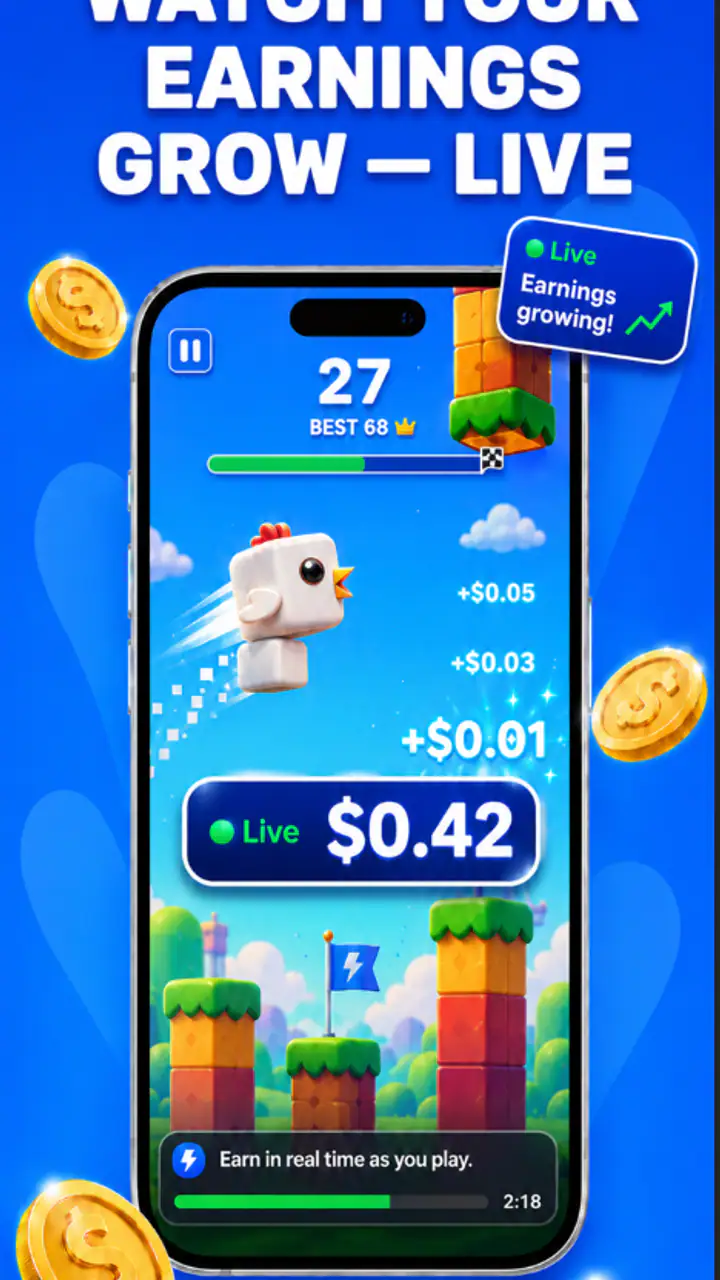
A realistic everyday example would be a commute where I have a dependable connection for part of the journey. I could browse SpeedCash before leaving, choose an activity while connected, and play during the waiting period. If the route enters a dead zone, I would not keep pushing through an important milestone and then assume the result had been safely recorded. I would wait until the connection returned and check the app before making another decision.
That habit sounds cautious, but it is useful for any service where progress and rewards are handled online. The key is to separate “I played the game” from “the app has confirmed the activity.” Those are not always the same moment from a user’s point of view.
Moving between SpeedCash and a game
The reward format creates a different rhythm from ordinary entertainment apps. With a normal casual game, I open it, play, and leave. With SpeedCash, I am also thinking about whether the session is connected to a reward objective. That extra layer can make the experience more motivating, but it can also make me more conscious of every interruption.
I found it helpful to keep my workflow simple. I would choose one activity, pay attention to what the app is asking me to do, and avoid jumping rapidly between several options. This is not a claim that the app requires a particular strategy; it is a way to reduce confusion for myself. When several games and reward goals compete for attention, it becomes harder to remember which action I started and whether the app had time to register it.
Notifications and incoming calls are another everyday complication. A brief interruption might be harmless, but repeated app switching makes any connected experience harder to follow. If I am trying to complete a session, I prefer doing it when I can leave the phone alone for a while. That makes SpeedCash feel more like a focused leisure activity and less like something I am squeezing into every spare second.
The app is therefore a better match for patient users than for people who want immediate, perfectly predictable feedback. If you enjoy exploring mobile games and can tolerate a little administrative awareness around your play, the format can be pleasant. If you dislike tracking progress or checking whether an online action has registered, a regular game without a reward layer may be more relaxing.
What to do when a session does not go smoothly
Connectivity problems are not the only possible source of friction. A game may take longer to open, the app may need another screen refresh, or a transition may not look as clear as I would like. When that happens, my first response is not to repeat the same action immediately. I pause, check whether the connection is stable, and return to the relevant screen carefully.
This approach protects against a common mistake: tapping repeatedly because nothing appears to happen. On a slow network, repeated taps can create uncertainty about what has already been submitted. Waiting a little and then checking the current state is less exciting, but it gives me a cleaner picture of what SpeedCash believes has happened.
If the app appears to have lost the thread of a session, I would record the basics for myself: which game I opened, what I was trying to complete, and roughly when the interruption occurred. I would then reopen the app only after the connection had settled. That small note is especially useful if I need to explain a problem later, because “it did not work” is much less helpful than a clear description of the sequence.
I also would not uninstall and reinstall in the middle of a questionable reward situation. Reinstalling is a dramatic step that can make it harder to understand whether the issue was connectivity, recognition, or something else. A calmer recovery process is better: stabilize the network, revisit the app, look for the current status, and only then decide whether further action is sensible.
These are user habits rather than advertised features, but they make a real difference with SpeedCash. The app’s concept encourages users to think about completion and rewards, so a careful recovery routine prevents a temporary network problem from becoming unnecessary frustration.
Using it without wasting your mobile data
A reward app can be inexpensive in one sense and costly in another if I use it carelessly on a limited mobile plan. SpeedCash is free to install, but that does not mean every connected activity has no practical cost. Games may involve downloads or ongoing communication, and the exact amount can vary by what I choose to play and how long I stay connected.
For that reason, I would begin on Wi-Fi and observe how the app behaves before making it part of a mobile-data routine. I would also check my phone’s data settings and watch usage over a few sessions rather than guessing. This is especially important when traveling, using a shared plan, or relying on a limited allowance. A small reward is not attractive if it creates an unexpected data charge.
Battery use deserves the same common-sense treatment. Playing games while connected can be more demanding than reading or messaging, so I would avoid starting a long session with a nearly empty battery. In a mobile context, a power bank and a stable connection are more useful companions than rushing through several reward activities at once.
Another good habit is to avoid using public networks for anything sensitive unless I trust the network and understand my phone’s security settings. SpeedCash is an entertainment app, but reward-related actions still deserve ordinary digital caution. I would not share account details casually, and I would read each screen before confirming anything connected with rewards or redemption.
The data-conscious approach also changes how I judge value. If I am using Wi-Fi during time I would otherwise spend browsing aimlessly, SpeedCash can feel like a harmless way to add structure to my leisure. If I am consuming mobile data, battery, and attention only because I feel pressured to chase a reward, the trade-off becomes less convincing.
Who will enjoy it, and who should choose something else
I think SpeedCash is most suitable for adults who already like sampling casual mobile games, enjoy a goal attached to their play, and understand that rewards take patience. It can add a little motivation to otherwise empty moments. The Mature 17+ rating also means I would not treat it as a family app for younger children, even though the basic idea may sound simple.
I would be more cautious recommending it to anyone looking for reliable income. The store summary focuses on playing for real money, earning cash and gift cards, and receiving rewards for game activity, but those words should not be interpreted as a promise of a fixed return for a fixed amount of time. The practical value depends on how much you enjoy the available activities and how comfortable you are with the reward process.
It may also be the wrong choice for users with very limited data, unreliable connectivity, or little patience for checking online progress. A conventional offline-capable game is better when the main goal is uninterrupted play during flights, rural travel, or weak-signal commutes. A standard entertainment app is also better if you want to play without thinking about milestones, tracking, or redemption.
Compared with ordinary free games, SpeedCash offers an extra reason to return, but that extra reason adds complexity. Compared with other reward-oriented apps, its appeal is the combination of game discovery and incentives, while the same combination can make the experience feel less straightforward than simply opening a favorite game. I would choose SpeedCash when I want variety and a possible reward; I would choose a normal game when I want control, simplicity, and no connection-related uncertainty.
My final view after weighing the reward against the friction
SpeedCash works best when you treat it as connected entertainment with a possible payoff, not as a guaranteed earning method. I like the way it gives casual play a purpose, and the free entry makes it easy to test without committing money. The concept is especially appealing during small pockets of downtime, provided I have a dependable connection and realistic expectations.
The main limitation is not that the idea lacks appeal; it is that online reward experiences require more attention than ordinary games. A weak signal, an interrupted session, or uncertainty about whether progress registered can take the fun out of a short break. Users who plan around Wi-Fi, keep sessions organized, and check status calmly are likely to have a smoother experience than people who play impulsively wherever they happen to be.
My recommendation is therefore selective. If you are an adult who already enjoys mobile games and would like to explore a reward-based format, SpeedCash is worth trying for yourself. Start with a stable network, use Wi-Fi when possible, monitor your data, and judge it by the enjoyment you receive rather than by an imagined hourly income. If your priority is dependable earnings, offline play, or a completely frictionless game, I would look elsewhere.
For me, the strongest reason to keep it installed would be the combination of spare-time entertainment and a reward goal. The strongest reason to remove it would be feeling that the connection and tracking process are taking more attention than the games deserve. Used in the right setting, it is an interesting option from Leaps Gaming; used with unrealistic expectations, it can quickly become more effort than fun.
FAQs for SpeedCash: Play & Earn Money
What is SpeedCash: Play & Earn Money?
SpeedCash: Play & Earn Money is a rewards app that lets users earn points by completing activities such as playing selected games, trying sponsored offers, answering surveys, or reaching specific milestones. The available tasks may vary by country, device, and account. After collecting enough points, users can usually request eligible rewards through the redemption options shown inside the app.
Can you really make money with SpeedCash?
SpeedCash may provide real rewards for completed and verified activities, but it should not be considered a reliable income source. Earnings are generally small and depend on the number of offers available, the time required, and whether each task is tracked correctly. Read the conditions for every offer carefully, because some rewards require reaching a level, installing an app, or completing an action within a deadline.
How do withdrawals and rewards work in SpeedCash?
The withdrawal process depends on the reward methods currently supported in your region. SpeedCash may display options such as gift cards, digital payments, or other eligible rewards, together with minimum redemption limits. Before spending time on offers, check the rewards section for availability, processing times, verification requirements, and any restrictions. Reward requests can be delayed if an activity is still under review.
Is SpeedCash: Play & Earn Money safe to use?
As with any rewards application, users should review the permissions, privacy policy, and information requested during registration before using SpeedCash. Avoid entering unnecessary sensitive details, and download the app only from an official store or trusted source. Offers may redirect you to third-party services, so check their terms separately and be cautious of requests for payment, banking credentials, or unusual personal information.
Why might a SpeedCash offer or reward not be credited?
A task may fail to track if the app was not installed through the provided link, tracking permissions were disabled, an ad blocker or VPN interfered, the offer had already been completed, or its conditions were not met within the required time. Keep screenshots and confirmation emails when possible. If the reward remains missing, use SpeedCash’s support option and provide the offer name, dates, and relevant account details.
Pros
- Simple games make it easy to start earning rewards.
- No advanced gaming skills are required for most activities.
- The app offers multiple earning opportunities beyond gameplay.
- Reward progress is generally easy to track within the app.
- Suitable for short sessions when you have spare time.
Cons
- Earnings per activity can be very small.
- Some rewards may require substantial time to unlock.
- Ad frequency can make the experience feel repetitive.
- Cash-out options and minimum thresholds may vary by region.
- Availability of tasks and games may change without notice.


